Summary
As Acting Creative Director, I led a four-month redesign of an insurance agent portal built on the Guidewire PolicyCenter platform. Collaborating closely with a PwC strategy team and a PwC tech team, I managed evolving requirements, provided direction to a UI designer, and guided client stakeholders toward a simple, intuitive solution despite significant constraints. Our final presentation to the client's C-level executives received strong positive feedback, demonstrating our success in simplifying a complex, domain-heavy user experience.
Challenge
The client was a mid-sized regional insurer specializing in commercial policies. Their team relied on Guidewire’s standard PolicyCenter software, which often felt complex and unintuitive to users. Our goal was to simplify the agent experience by redesigning over 160 screens related to policy creation and claims submissions, spanning seven distinct policy types. The new portal needed to be built using Guidewire's Jutro design system to ensure backend compatibility, reflect the client's brand, and significantly improve usability.

In addition to these design challenges, the team also faced several significant constraints:
• Limited domain knowledge: Our design team initially had no insurance industry experience.
Aggressive timeline: We had only four months to complete the complex scope, forcing parallel workstreams like design-system customization and screen design, which increased rework.
Limited client interaction: Due to workload pressures, we depended heavily on the PwC strategy team to relay client feedback, sometimes leading to delays and communication challenges.
Multiple stakeholder approvals: We had to balance requirements and feedback from the client’s business team, their marketing team, PwC tech team, and Guidewire’s UX leadership, each with competing priorities and expectations.
Approach
Building Domain Fluency and Design Velocity​​​​​​​

Initially unfamiliar with insurance processes, we rapidly built foundational domain knowledge through frequent and ongoing touchpoints with PwC’s strategy team. These regular sessions deepened our understanding of insurance terminology, policy workflows, and underlying business logic throughout the project. This continuous learning allowed us to confidently identify opportunities to enhance the user experience while maintaining familiar patterns and UI elements where appropriate to minimize agents' learning curve.

Additionally, at the outset of the project, I analyzed existing Guidewire screens across all seven policy types to identify repeated UI patterns and created improved, reusable versions based on the Jutro design system. Recognizing that the Business Owners Policy workflows involved nearly all these reusable patterns, I chose it as our initial focus and owned the end-to-end design for that policy type. By designing and validating this complex flow first, we simultaneously validated our newly created Jutro UI patterns, allowing our UI designer to confidently reuse them and significantly accelerating subsequent work.

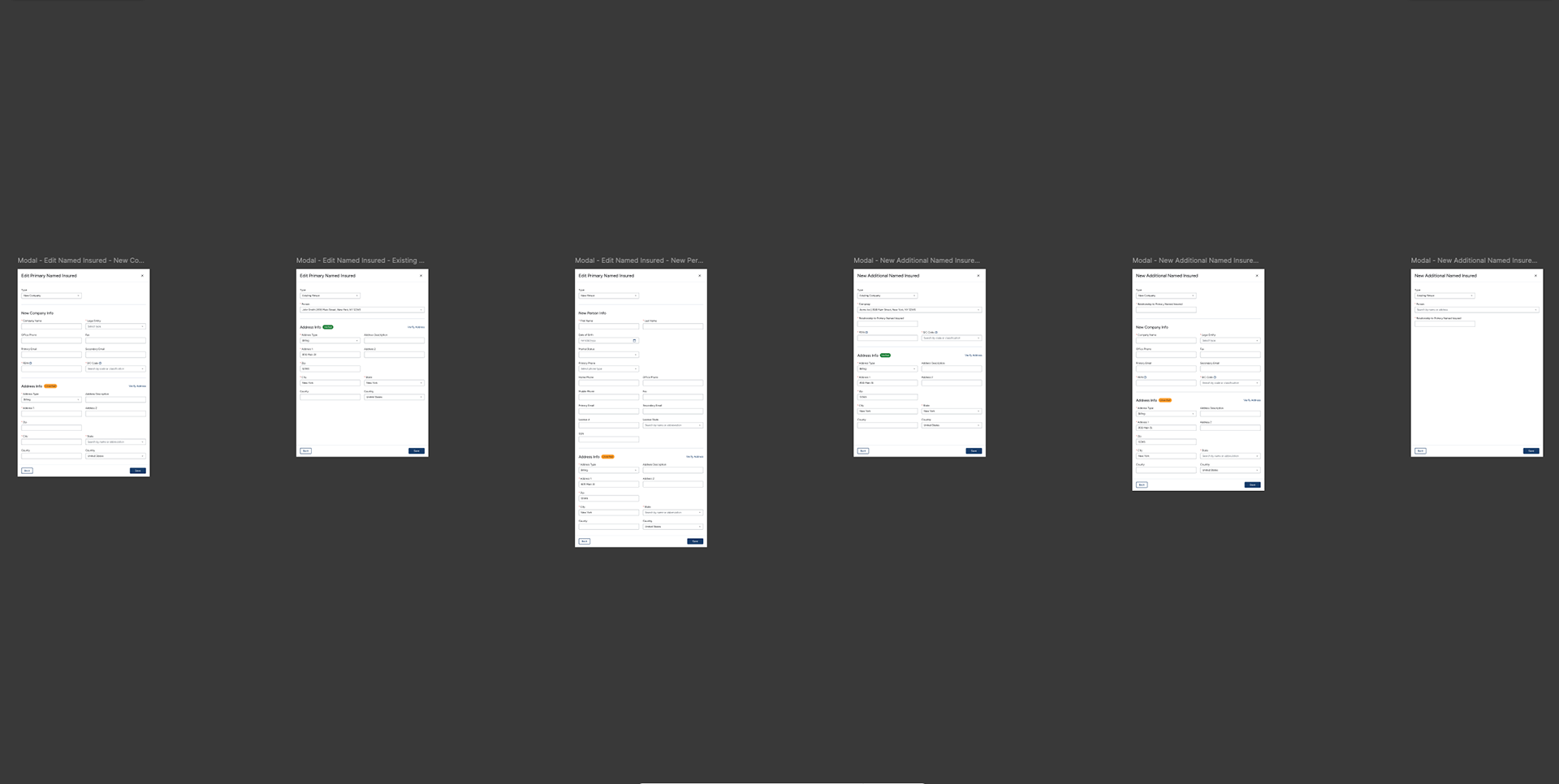
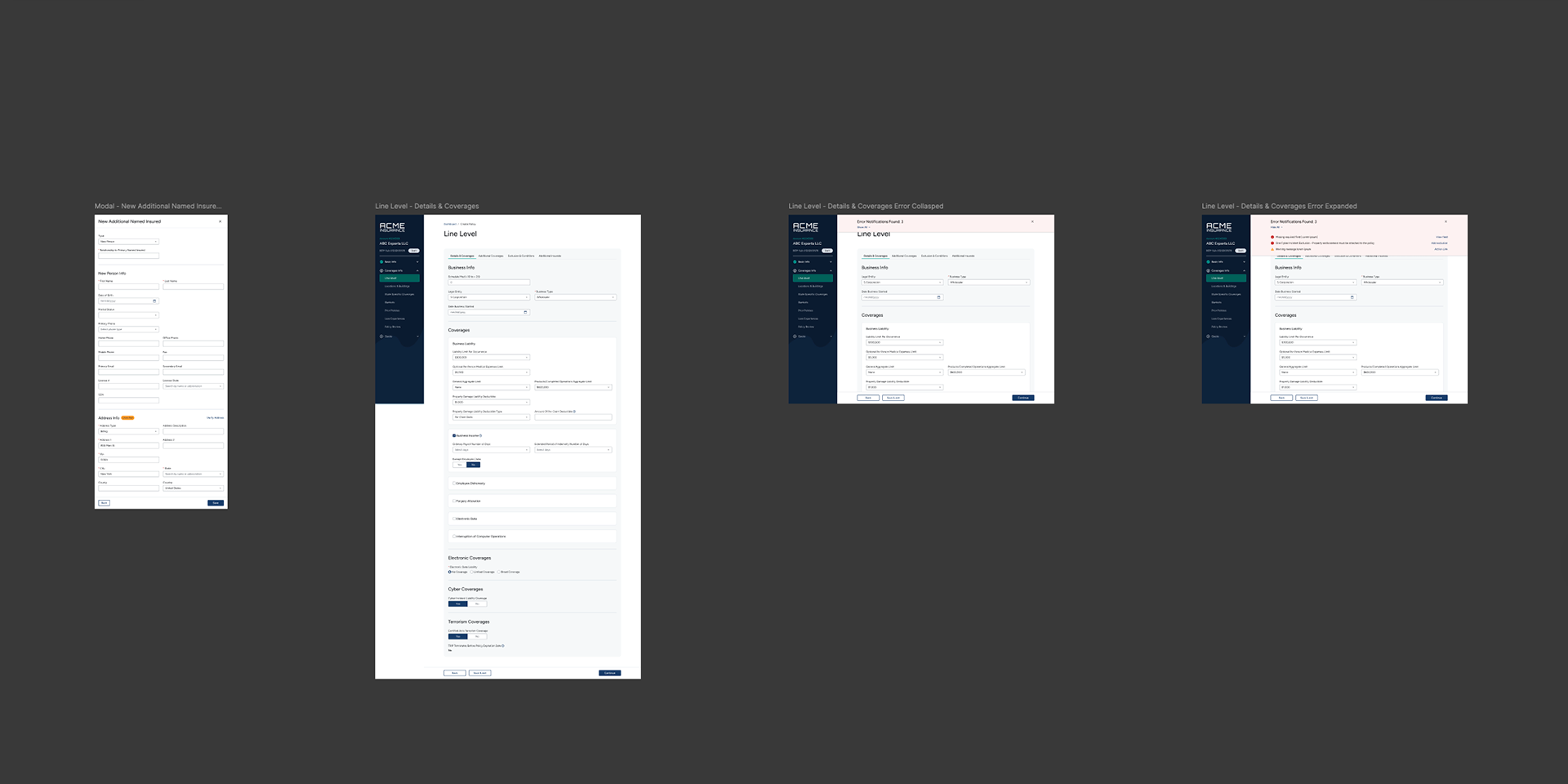
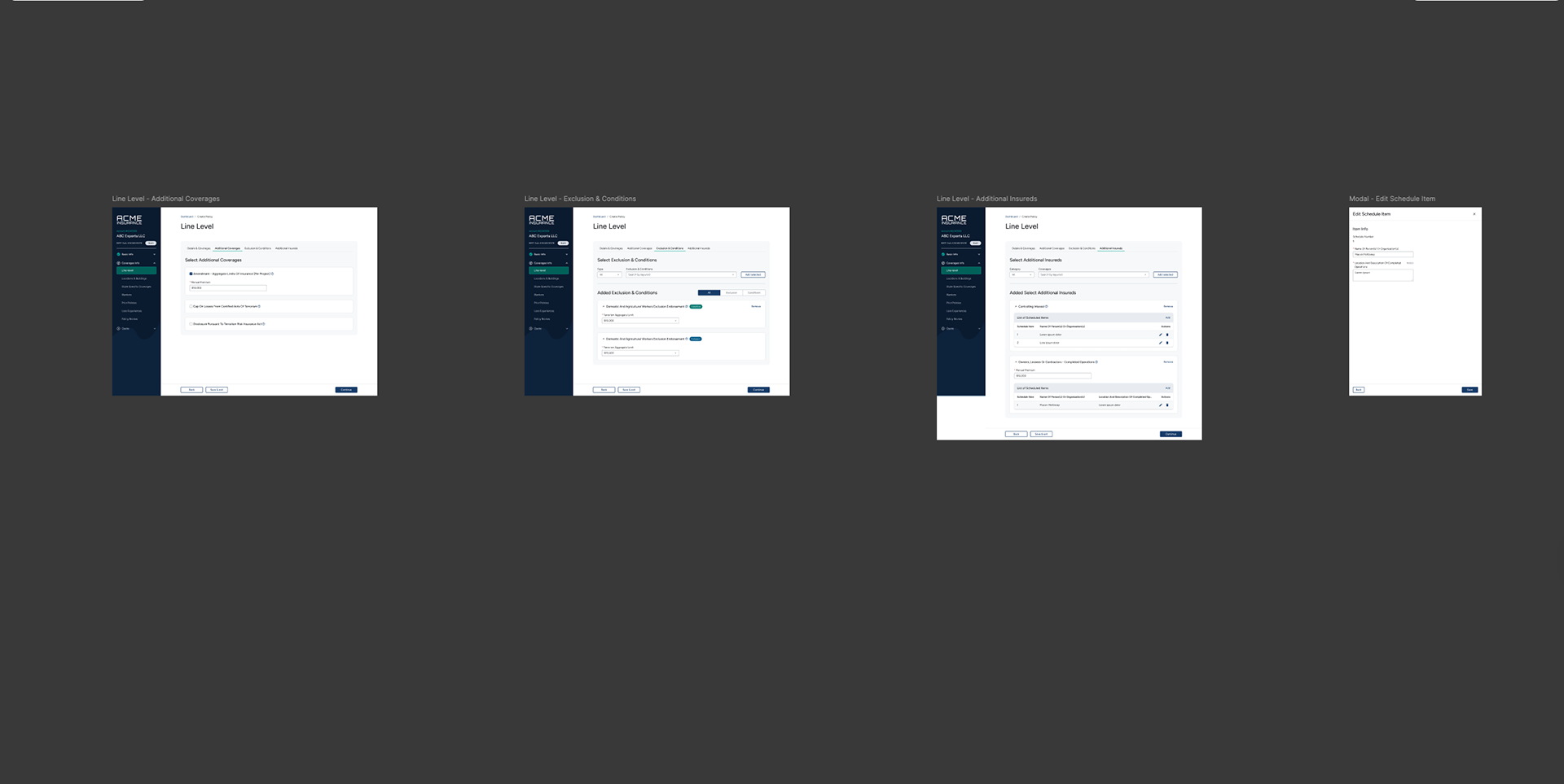
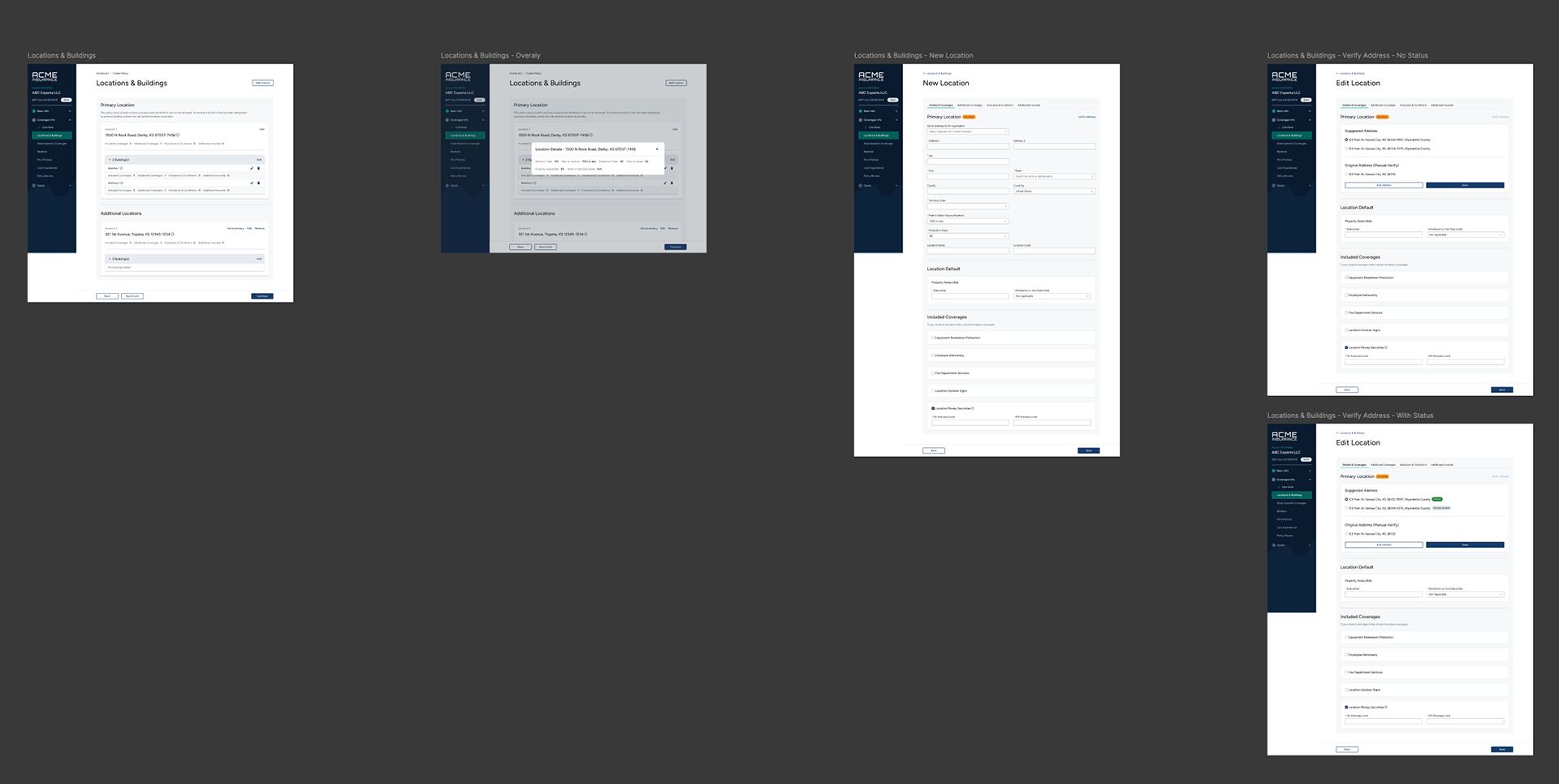
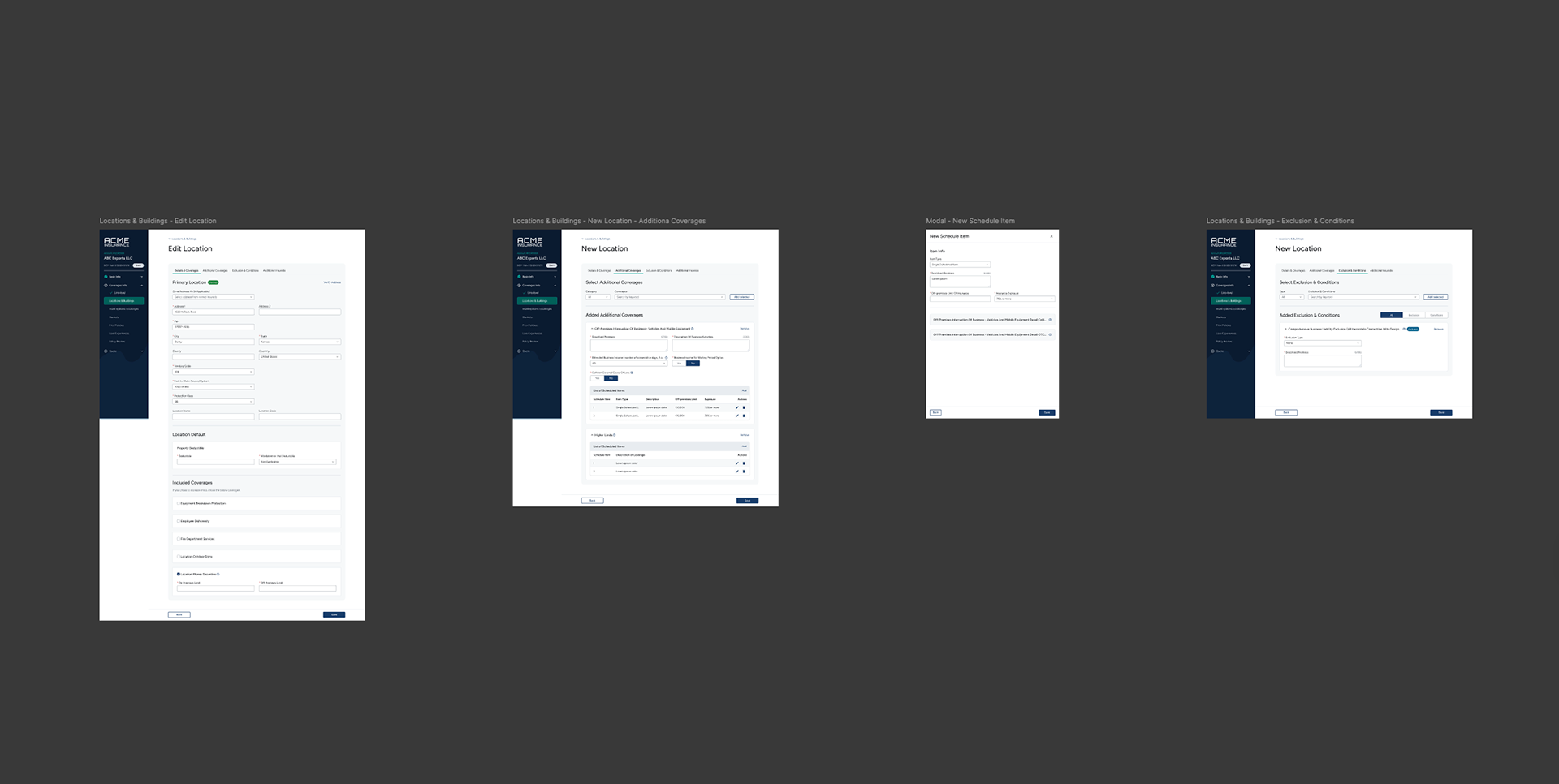
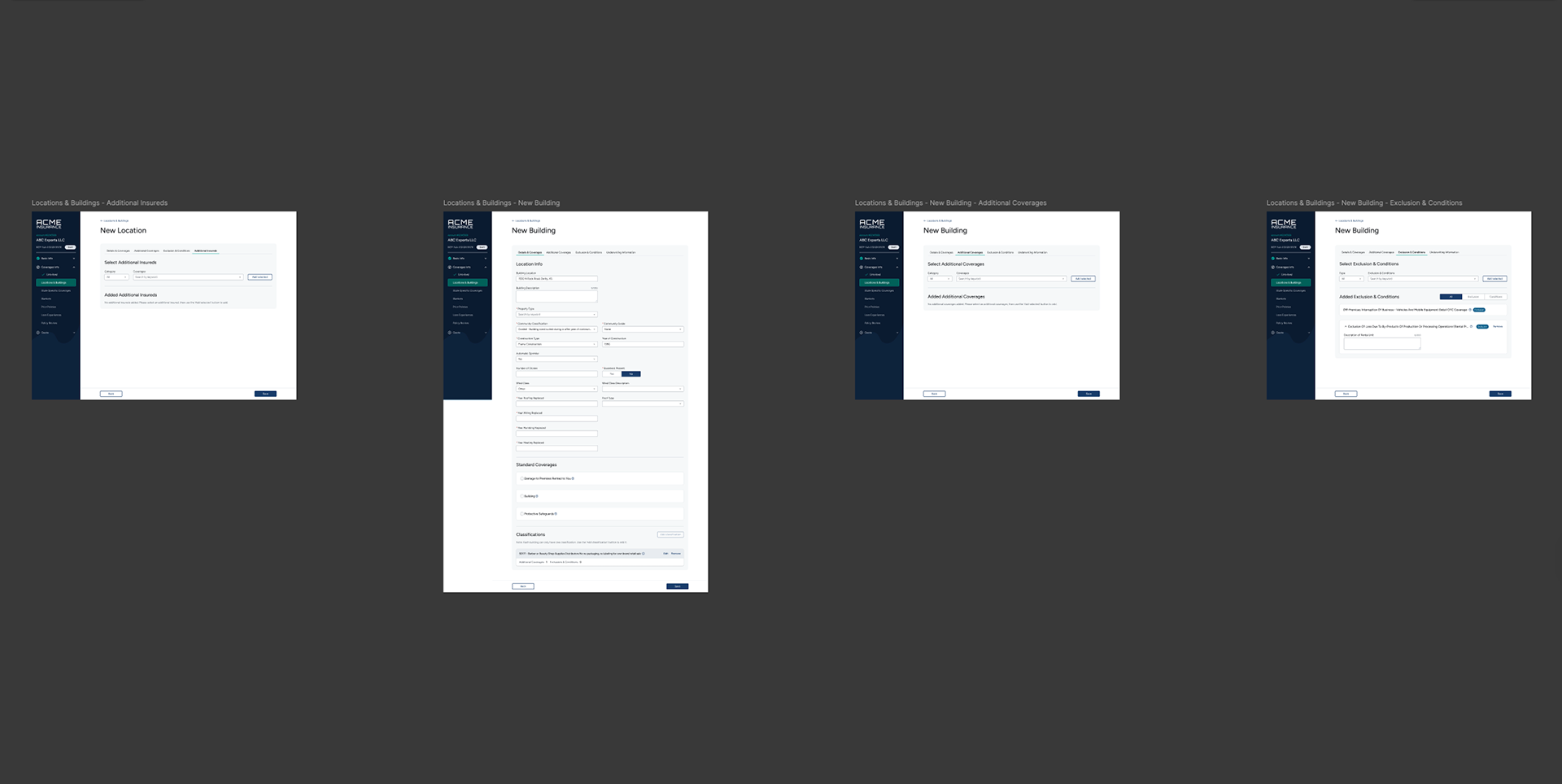
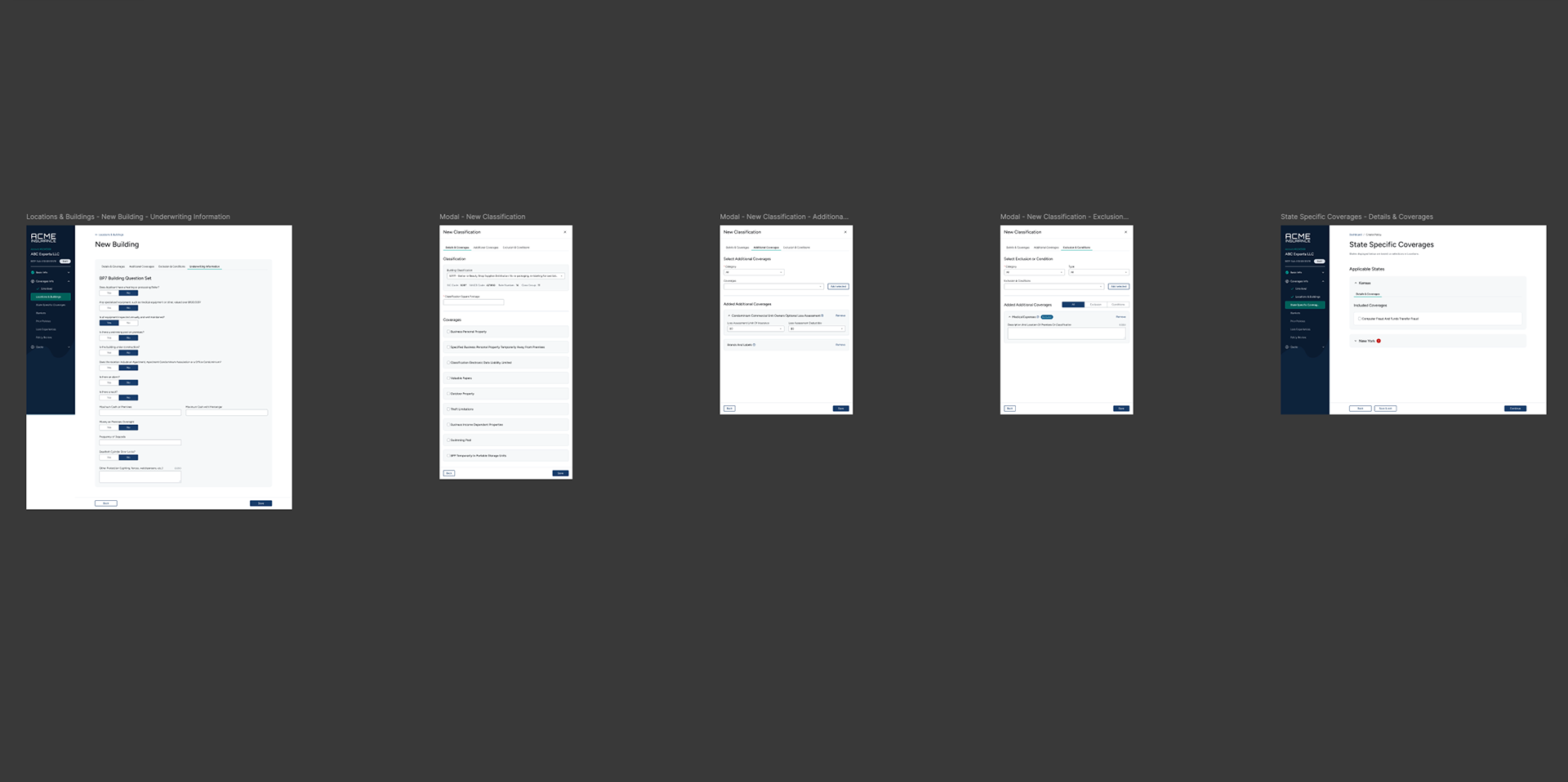
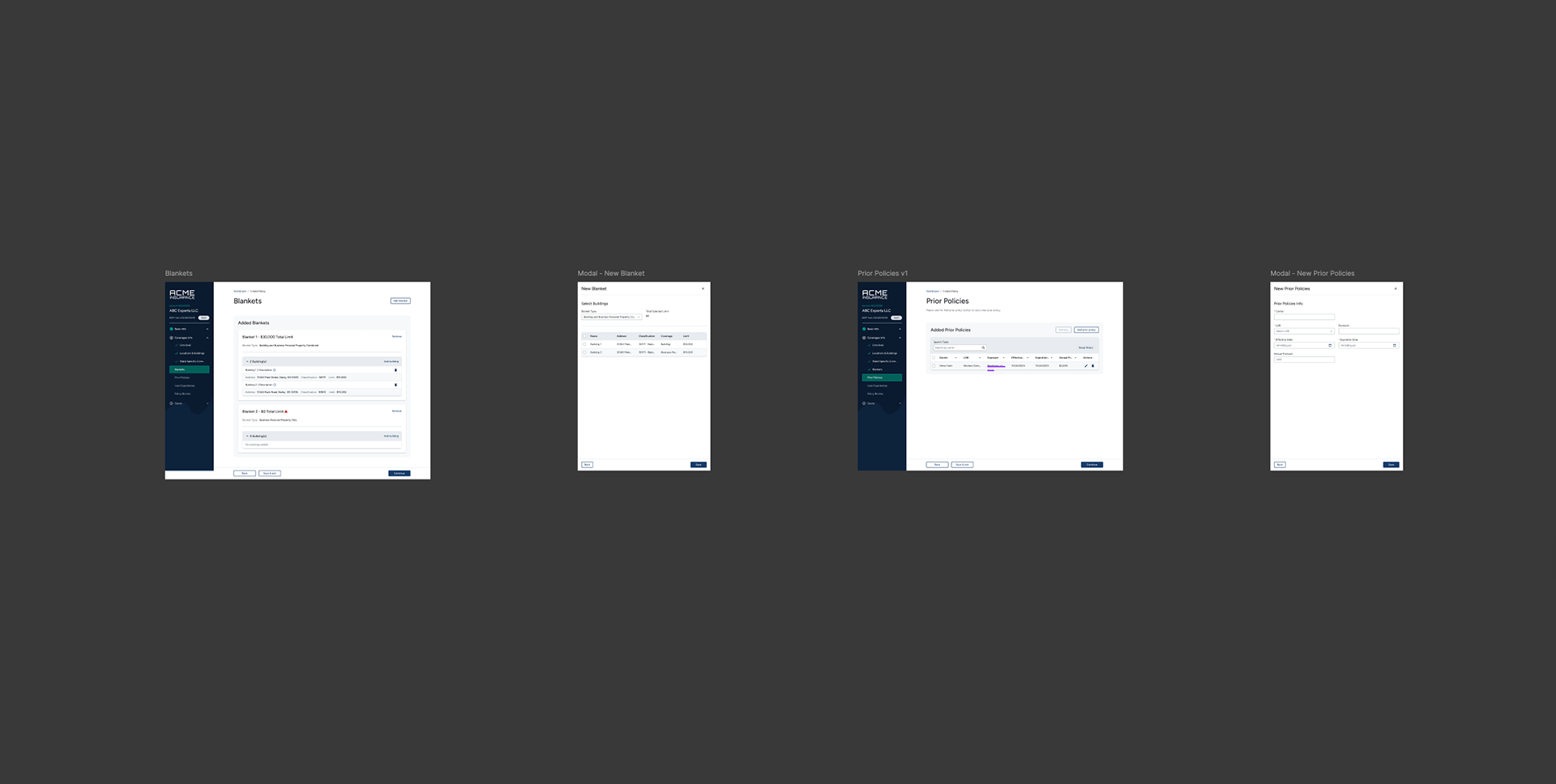
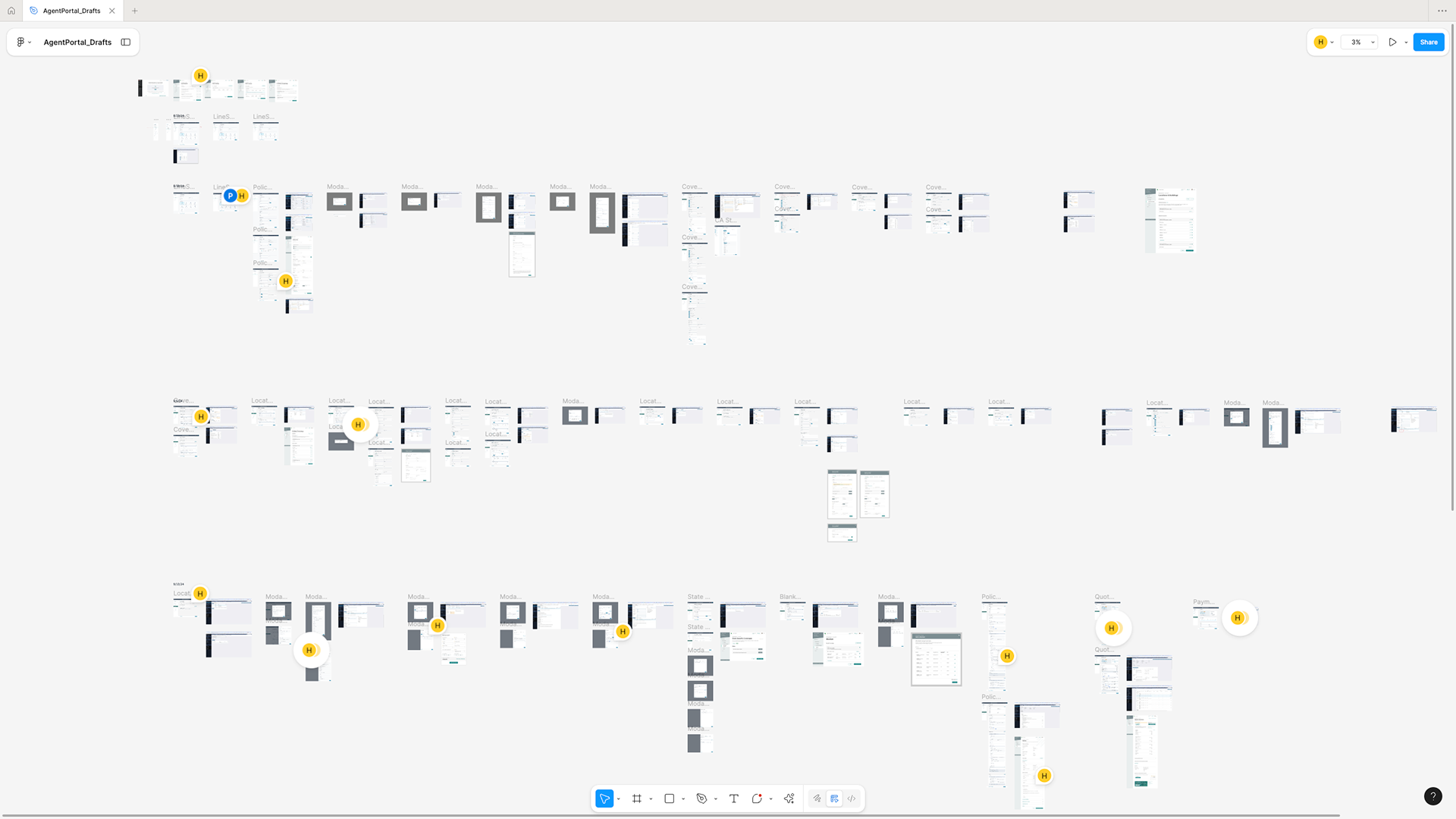
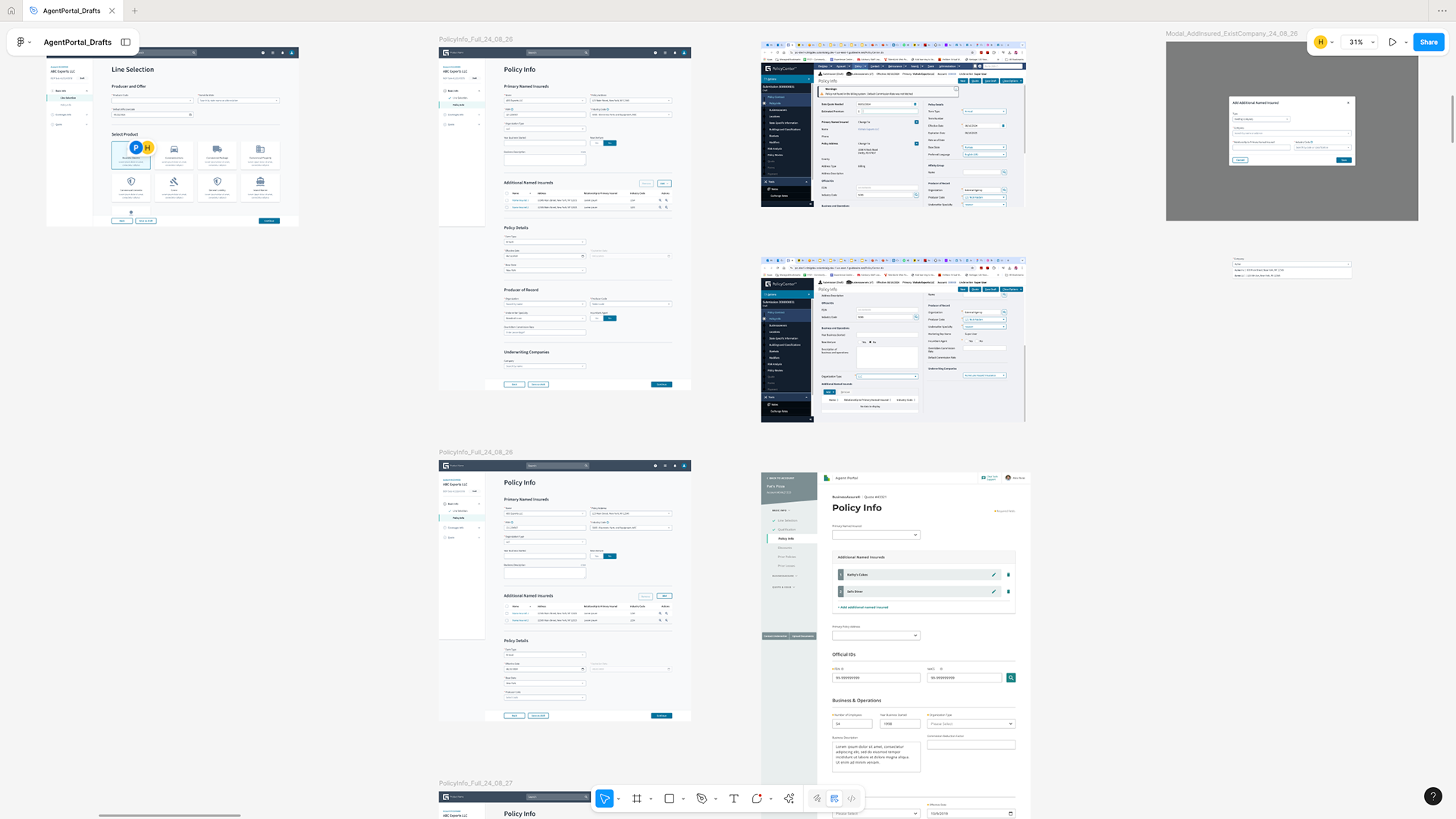
Internal Figma file used to present draft wireframes for the Business Owners Policy quote flow.
Designs were shown side by side with current PolicyCenter screens and other inspirations to communicate design rationale. Over 25 screens and states were validated and finalized across two sprints.
Close-up of a Business Owners Policy wireframe.
Designed using UX best practices like visual hierarchy, progressive disclosure, and an F-pattern layout to improve usability. We retained familiar PolicyCenter elements to reduce the learning curve and aligned closely with the out-of-the-box design system to ease implementation for developers.
Orchestrating Parallel Execution and Team Growth
While I focused on Business Owners Policy flow and reusable UI patterns, I gave our UI designer ownership of customizing the Jutro design system to reflect the client’s brand. This parallel approach ensured we made effective use of time and resources within our aggressive four-month timeline. It also enabled PwC’s strategy team to promptly begin validating initial wireframes with clients, despite inevitable rework following updates to the customized components.

To support design system approval, we ran workshops with the client’s marketing team to explain the constraints of Guidewire’s design system and token structure, along with our proposed branding approach. I encouraged the UI designer to actively participate in these sessions, giving him space to present his ideas and rationale. This allowed him to showcase his visual design strengths, deepen his understanding of component-level design, and build confidence in stakeholder interactions.

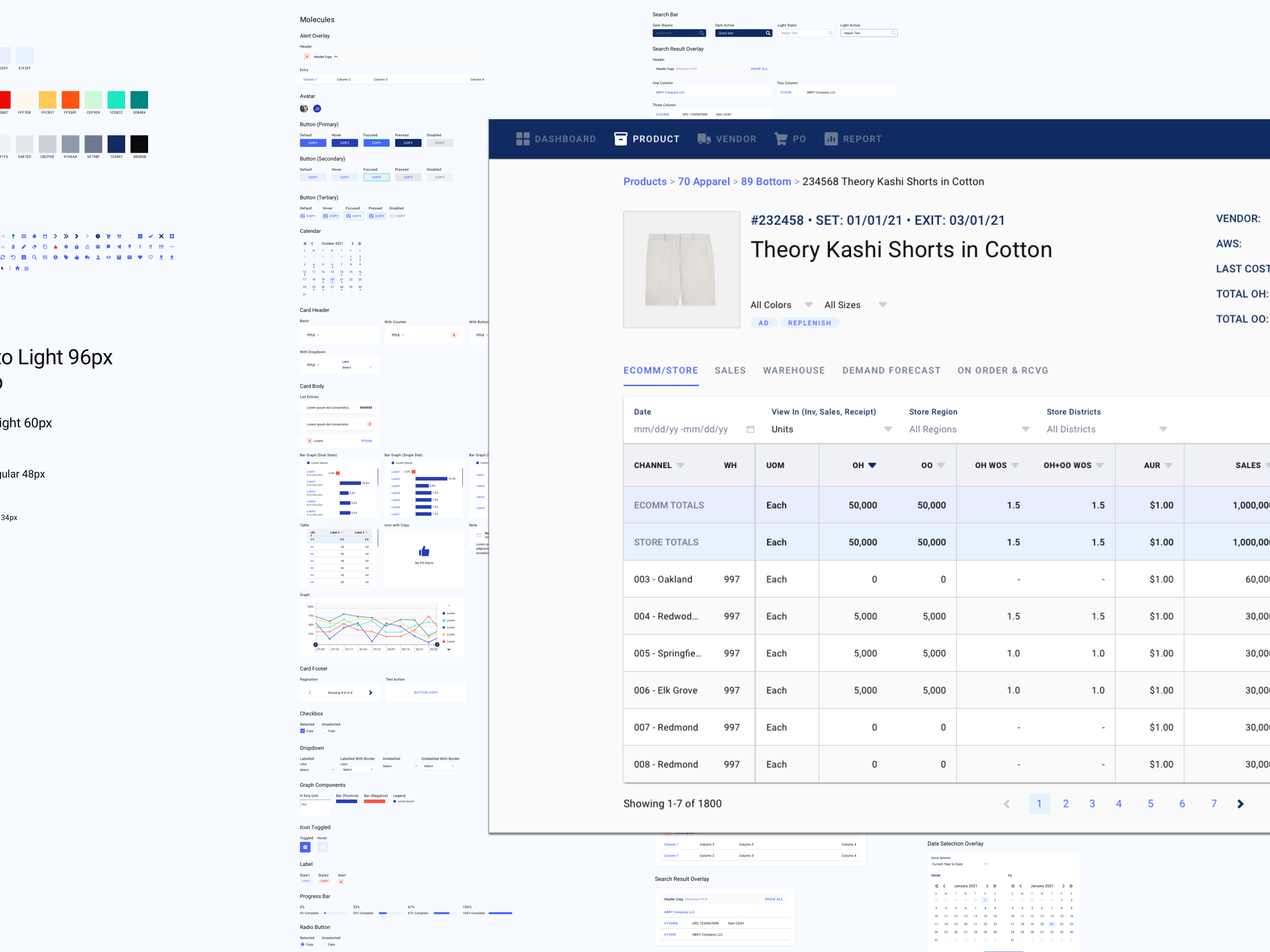
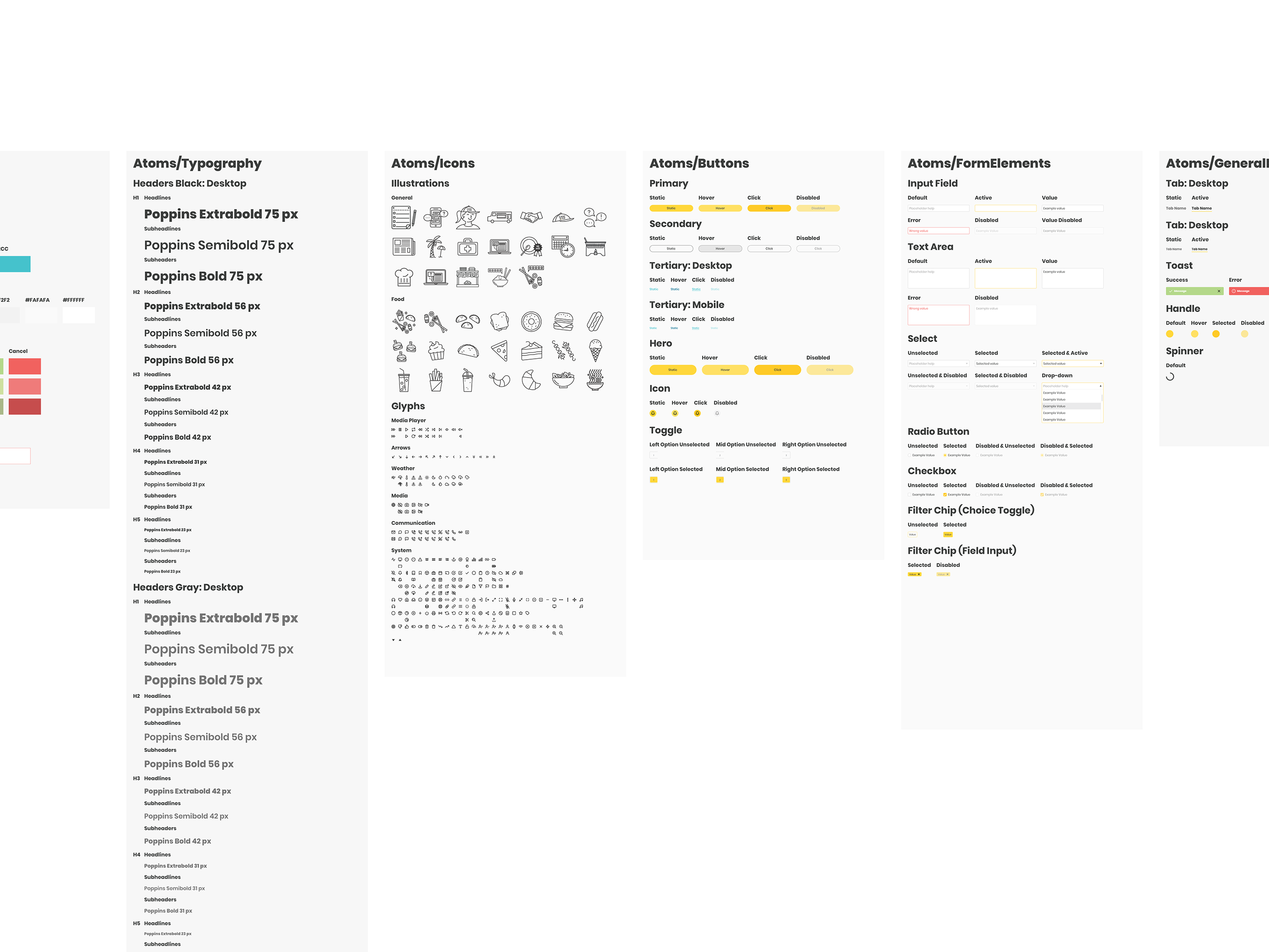
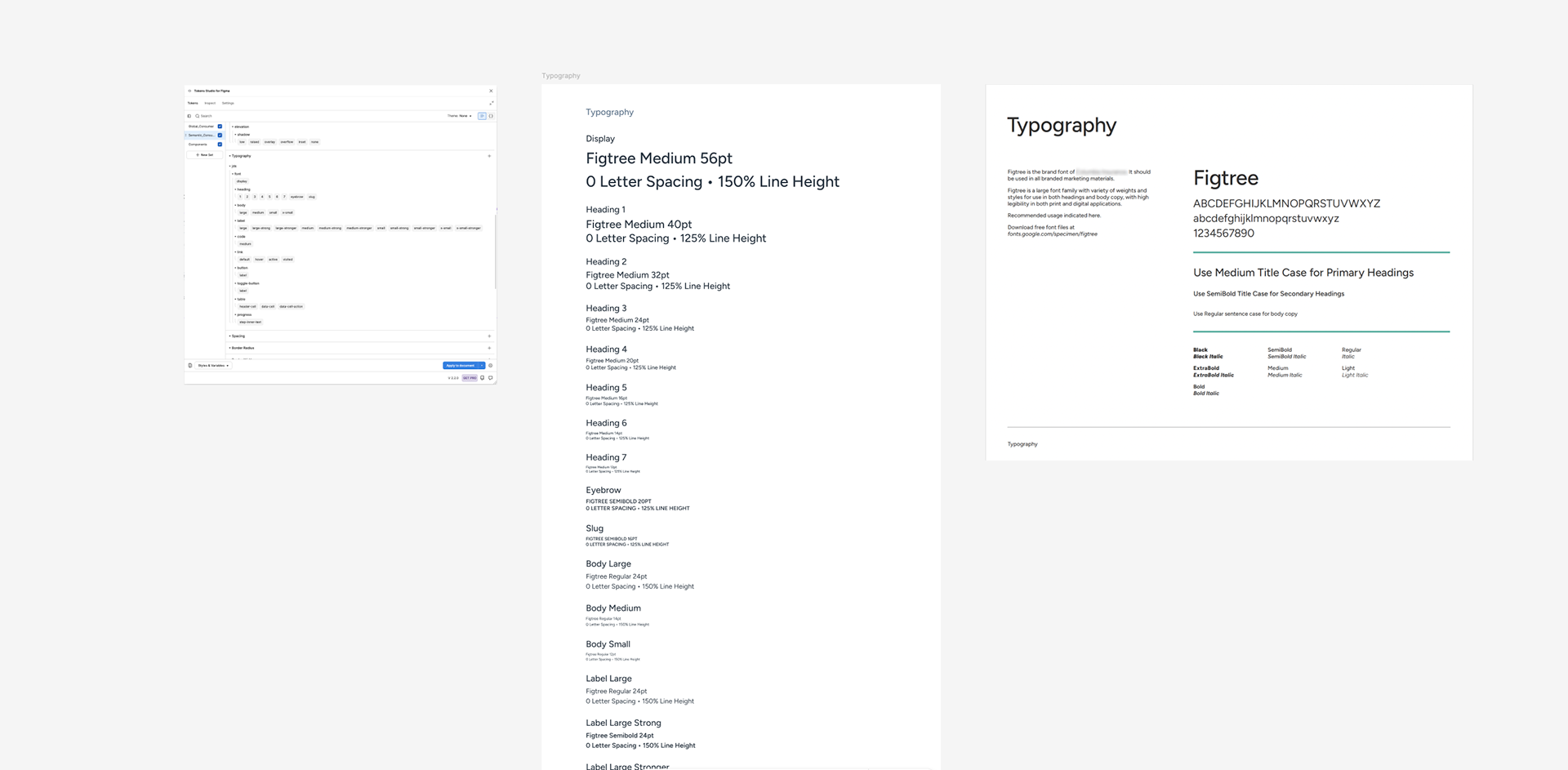
Visual presented to client to illustrate how Guidewire Jutro design tokens handle typography.
It highlights system constraints, token behavior for fonts, and our proposed approach for applying the client’s brand typeface within those limitations.
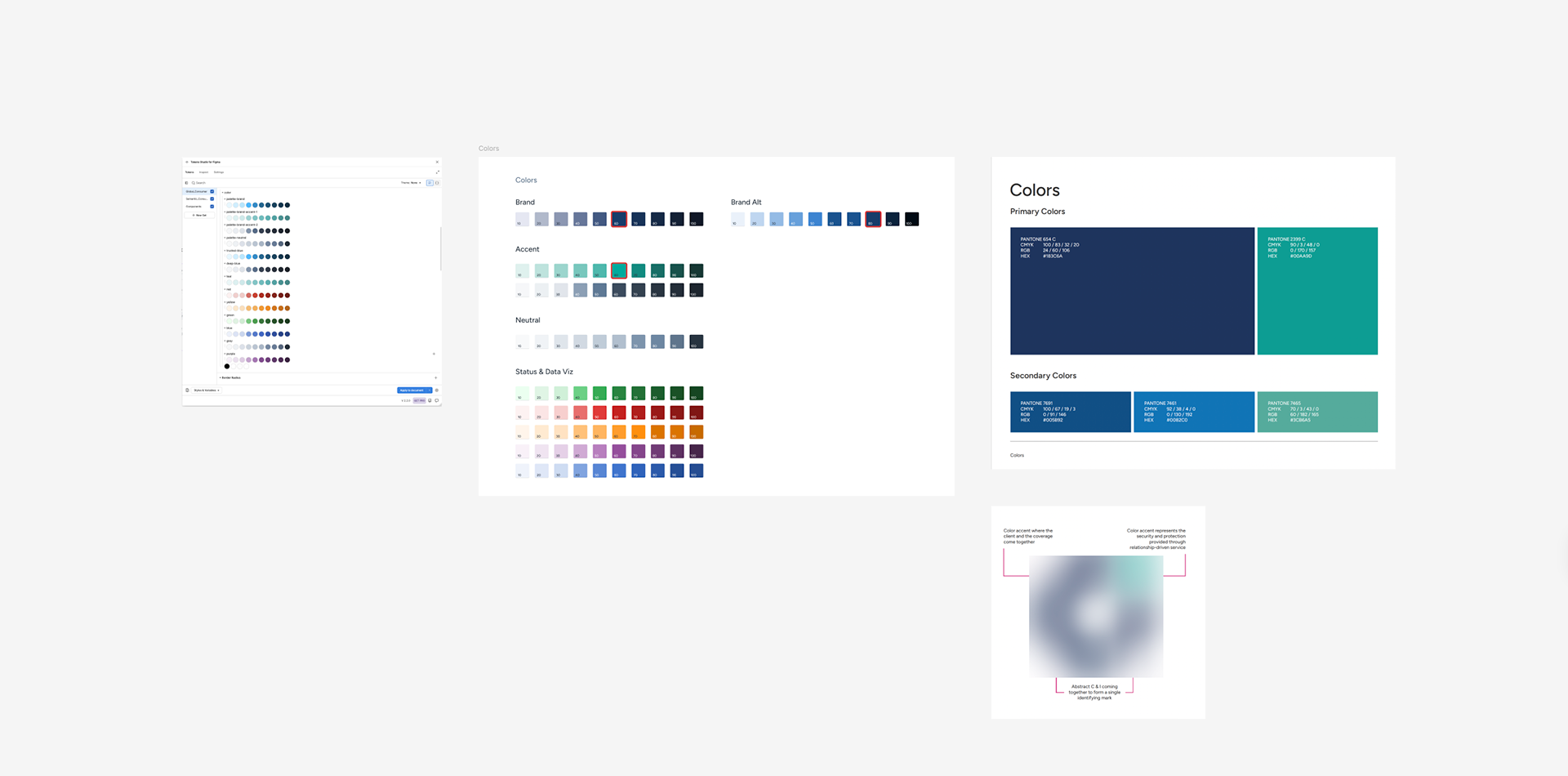
A similar visual was created for colors, illustrating how we expanded the client's brand palette to meet design system requirements while ensuring accessibility compliance.
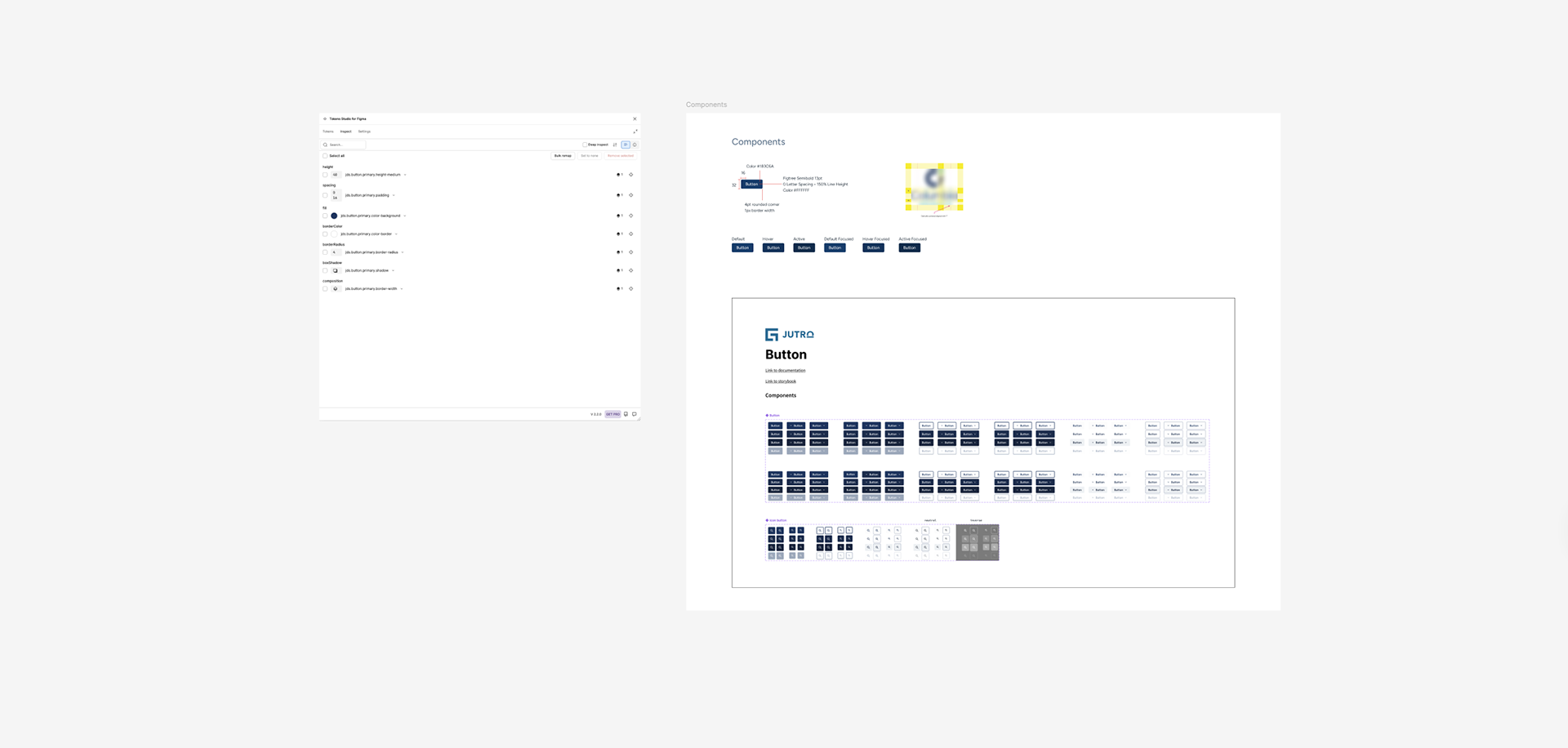
Another visual focused on components, highlighting where we recommended brand-specific adjustments and where default styles were retained to support development efficiency.

Leading Cross-Team Coordination and Delivery
Given our limited direct access to the client, I maintained regular check-ins with the PwC strategy team to clarify feedback and ensure alignment on design rationales. This helped minimize delays and miscommunications. I also held separate review sessions with the PwC tech team, the client’s marketing team, and Guidewire’s UX leadership to navigate the complexity of stakeholder expectations. This approach allowed me to synthesize competing perspectives, make informed design decisions, and secure approvals efficiently through targeted follow-ups.

To put these decisions into action, I established daily design critiques and standups. These sessions allowed me to mentor the UI designer, clarify business requirements, promptly resolve blockers, and support his long-term growth. This structured, collaborative routine helped maintain a steady rhythm of weekly design handoffs, internal reviews, and validations, keeping our team closely aligned with the project roadmap.
Outcome
We concluded the engagement by presenting a clickable, high-fidelity prototype to the client’s C-level stakeholders. The response was overwhelmingly positive, with feedback highlighting the design’s clarity, intuitiveness, and overall quality. One stakeholder even remarked that they 'couldn’t wait to get their hands on it to try it out.' Our work not only met the project’s goals within a compressed timeline, but also established a reusable design foundation that was adopted across several future engagements.

Key results and deliverables included:
• 160+ high-fidelity screens covering 7 insurance policy types
• Customized Guidewire Jutro design system with client-branded styling
• Annotated UI designs and design token documentation
• Reuse of design assets in three additional PwC client projects

Recording of interactive Figma prototype for the Workers’ Comp policy creation flow.
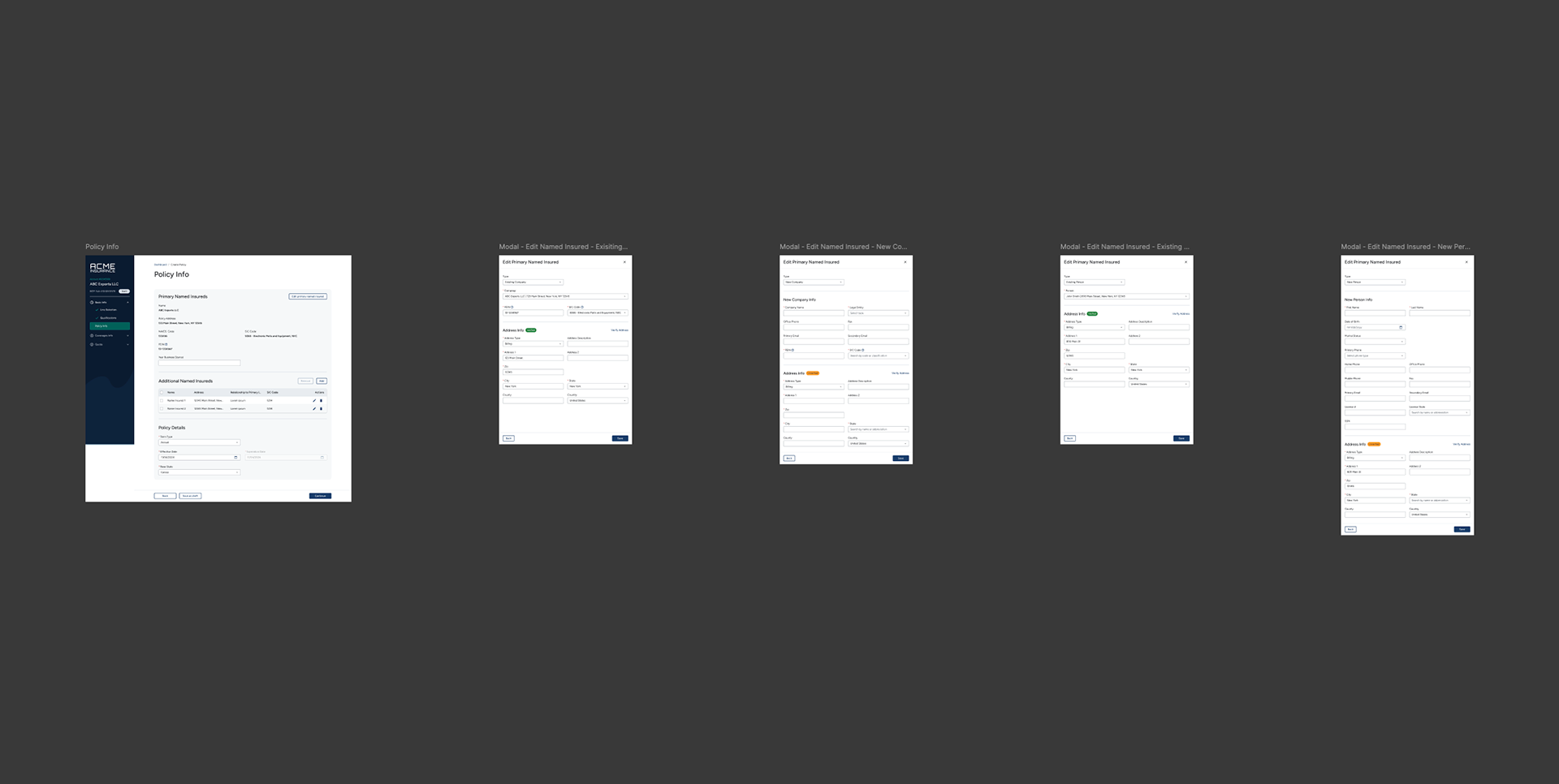
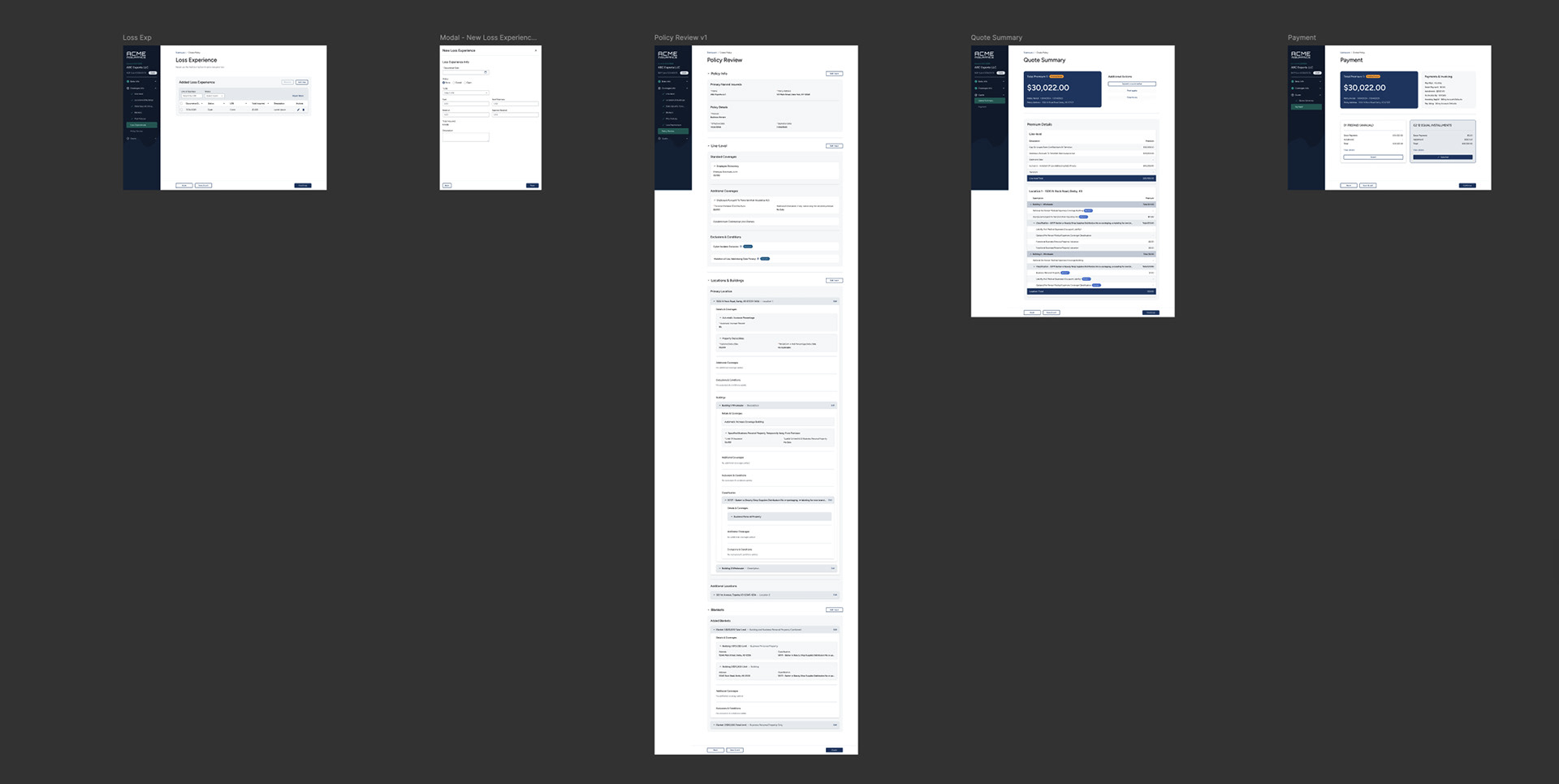
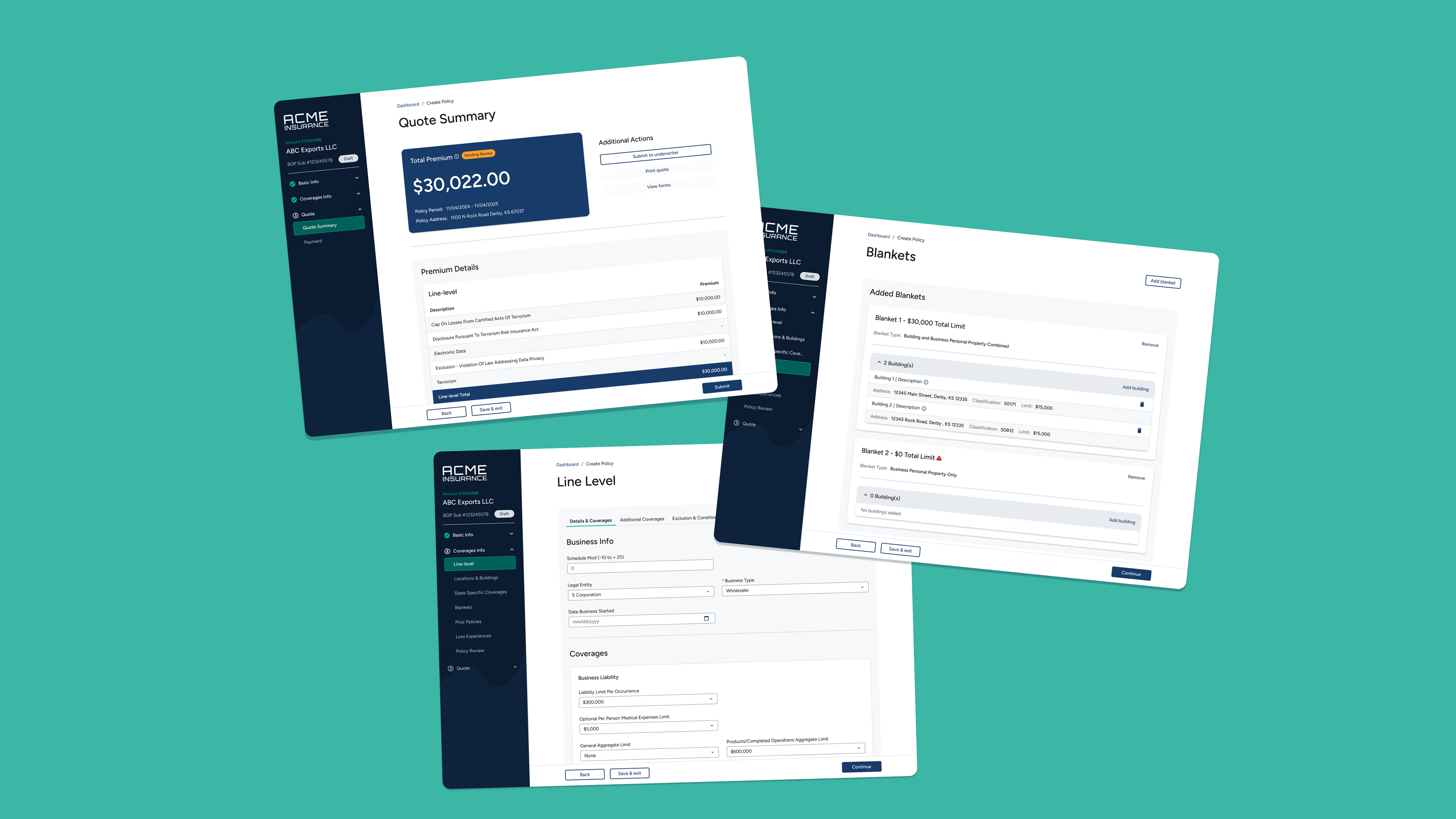
Policy Creation Sample Designs - Business Owners Policy
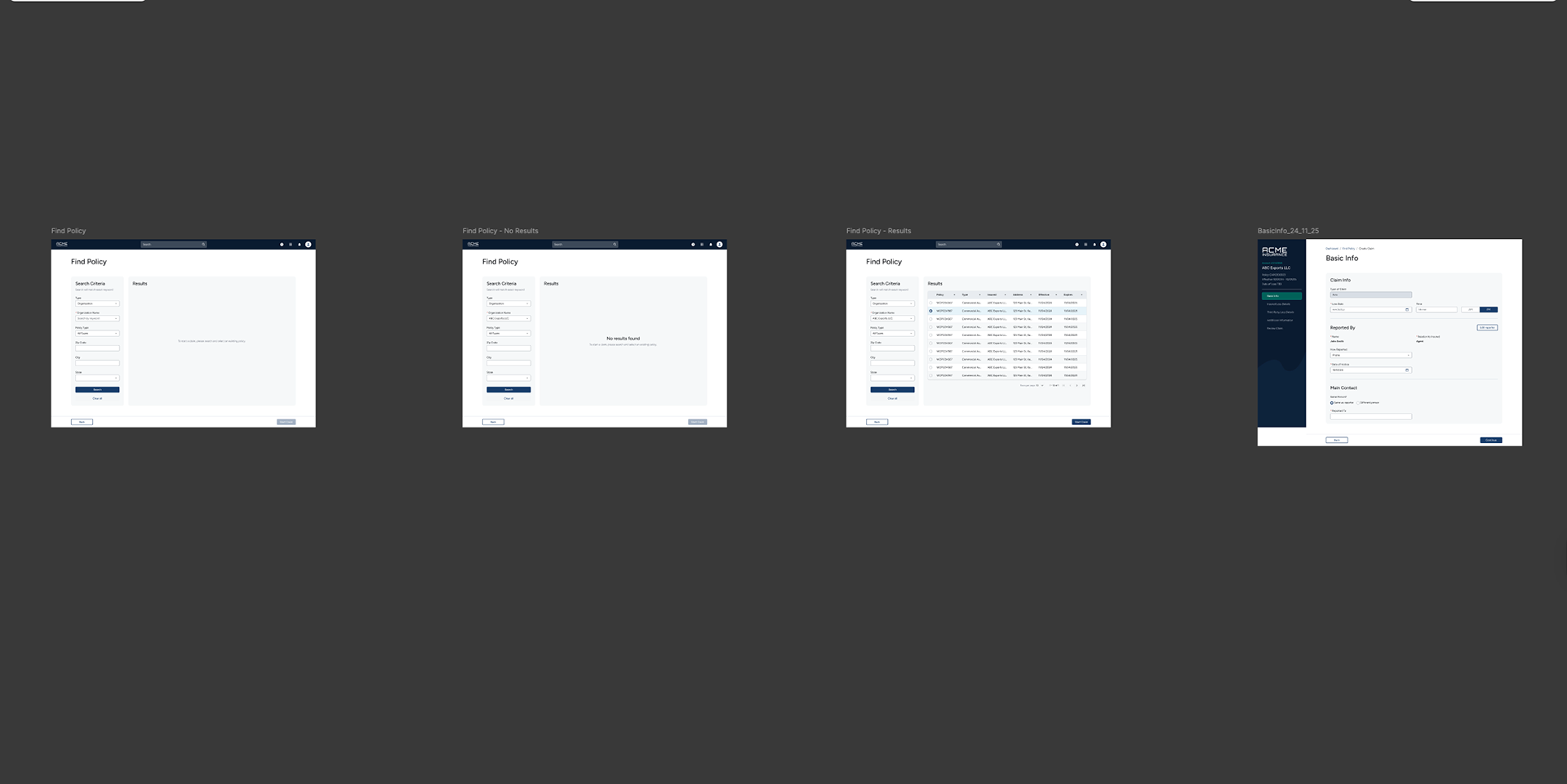
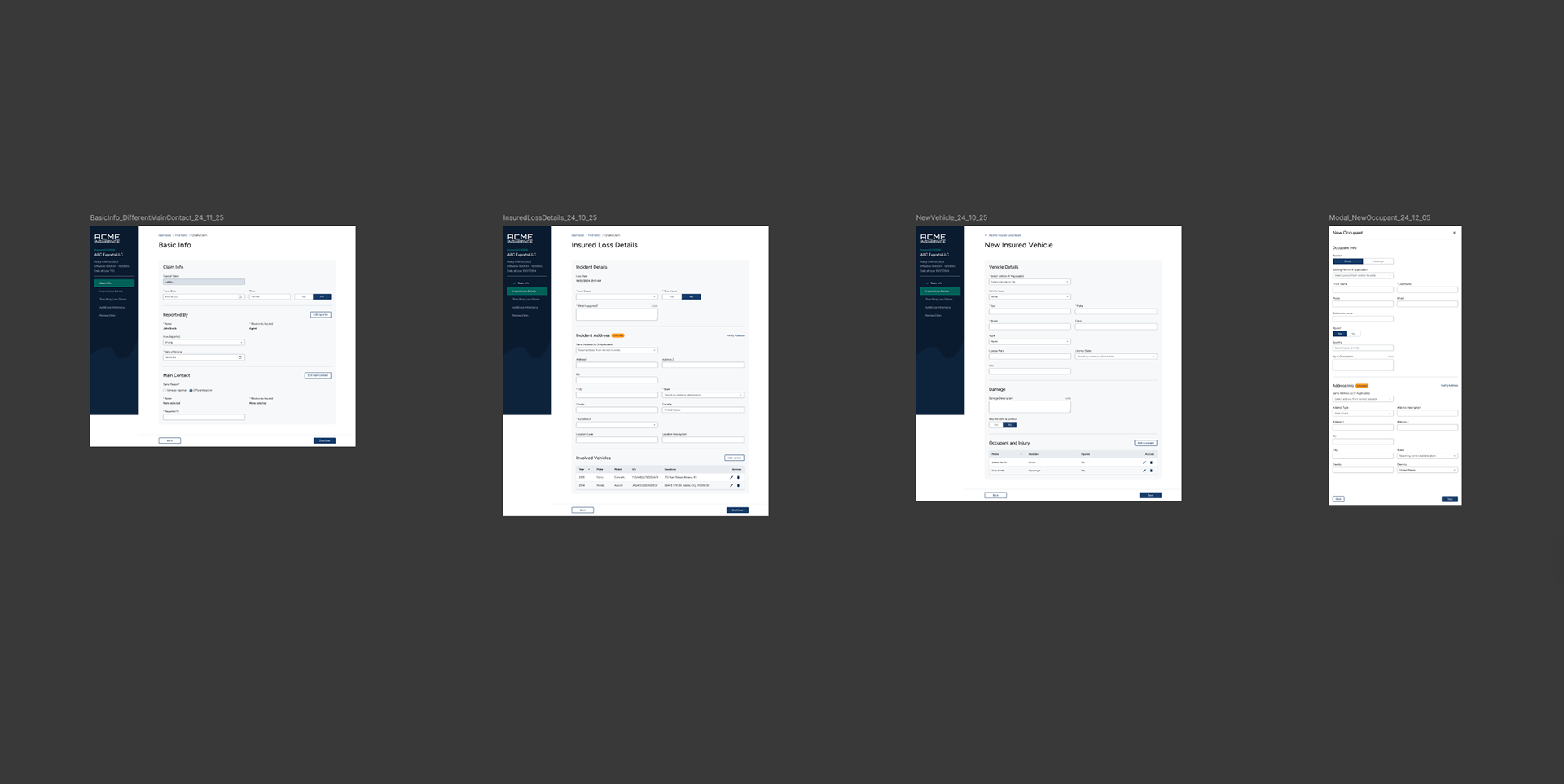
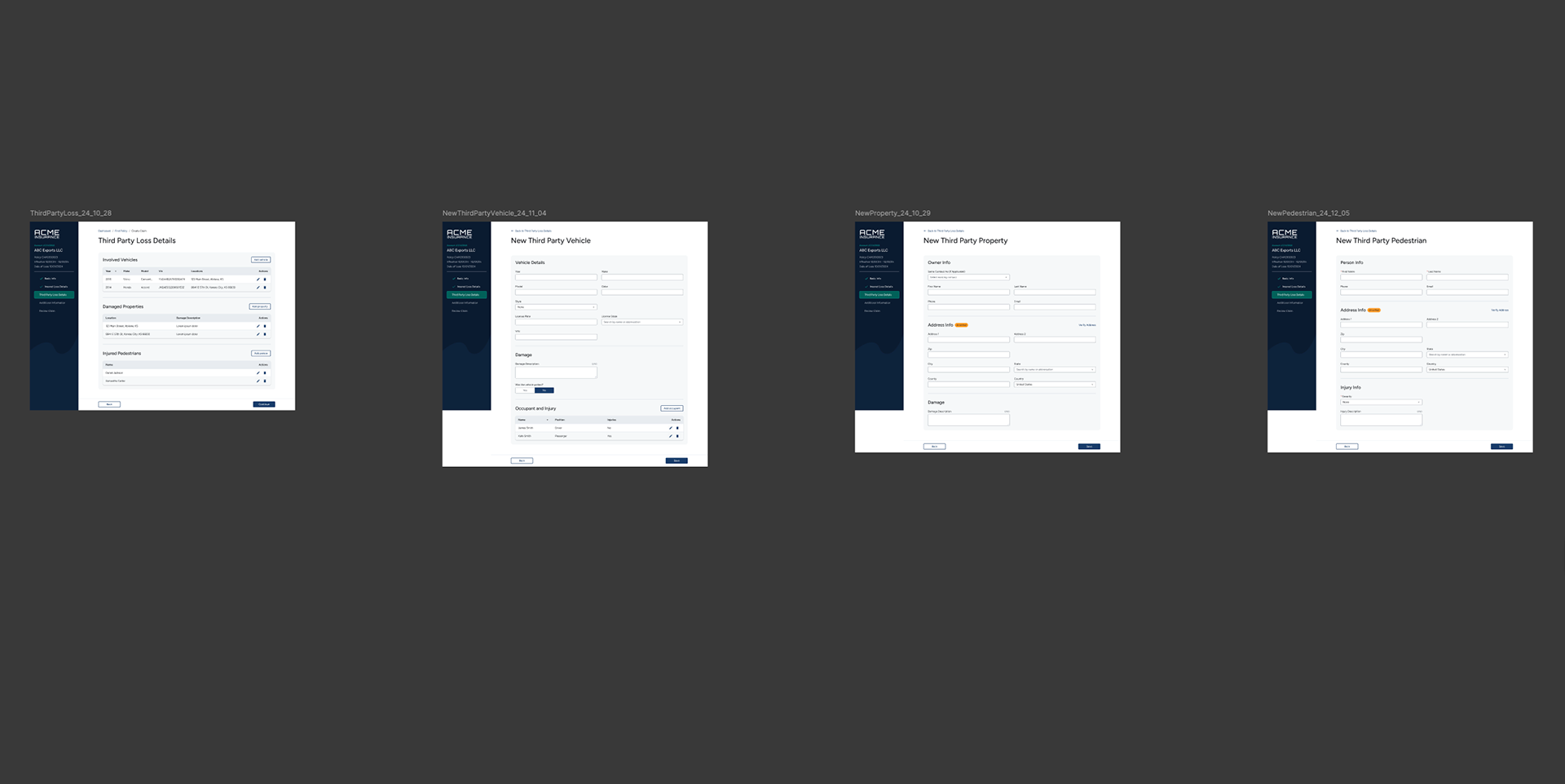
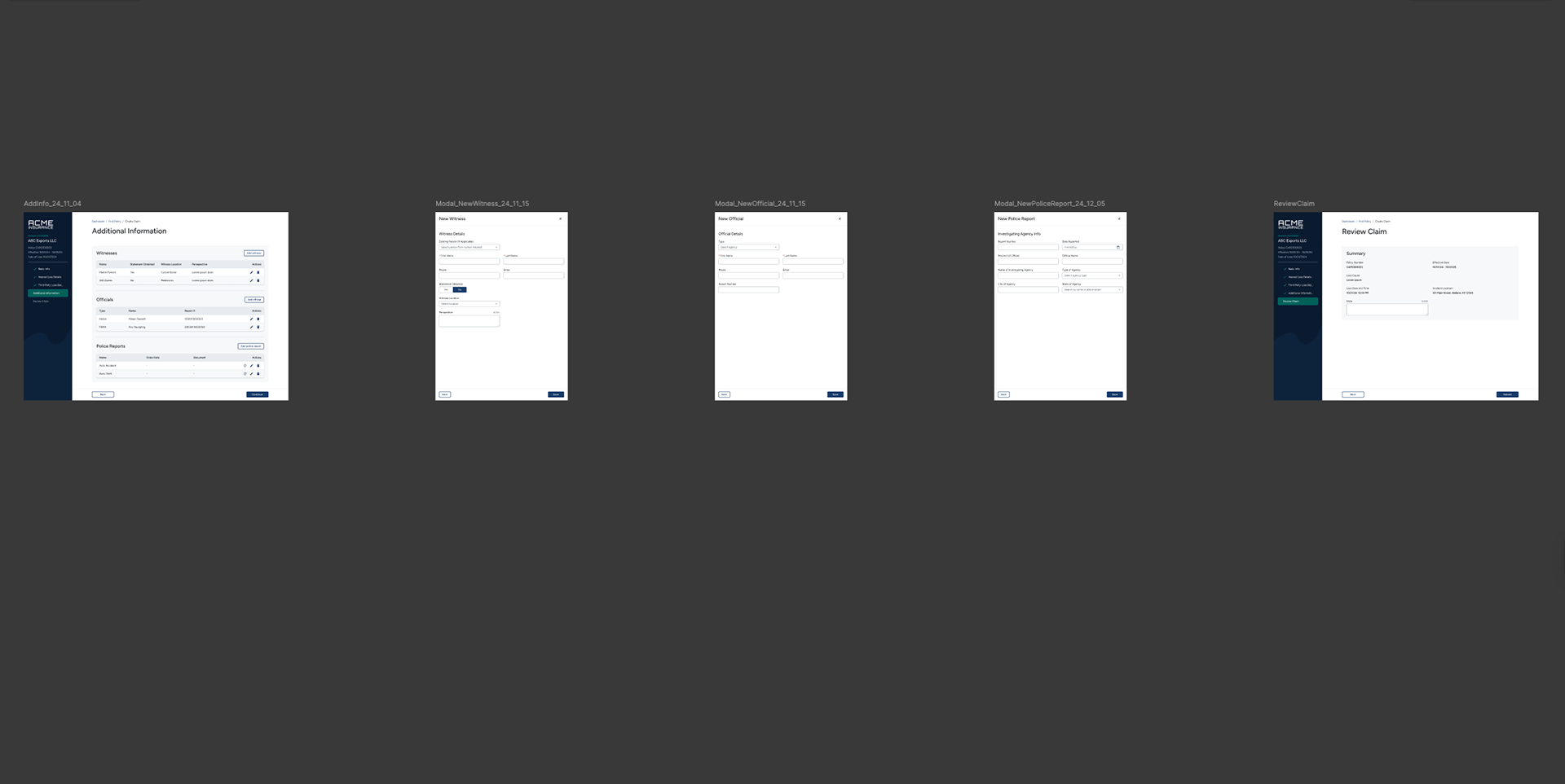
Claims Submission Sample Designs - Commercial Auto

OTHER PROJECTS

Back to Top